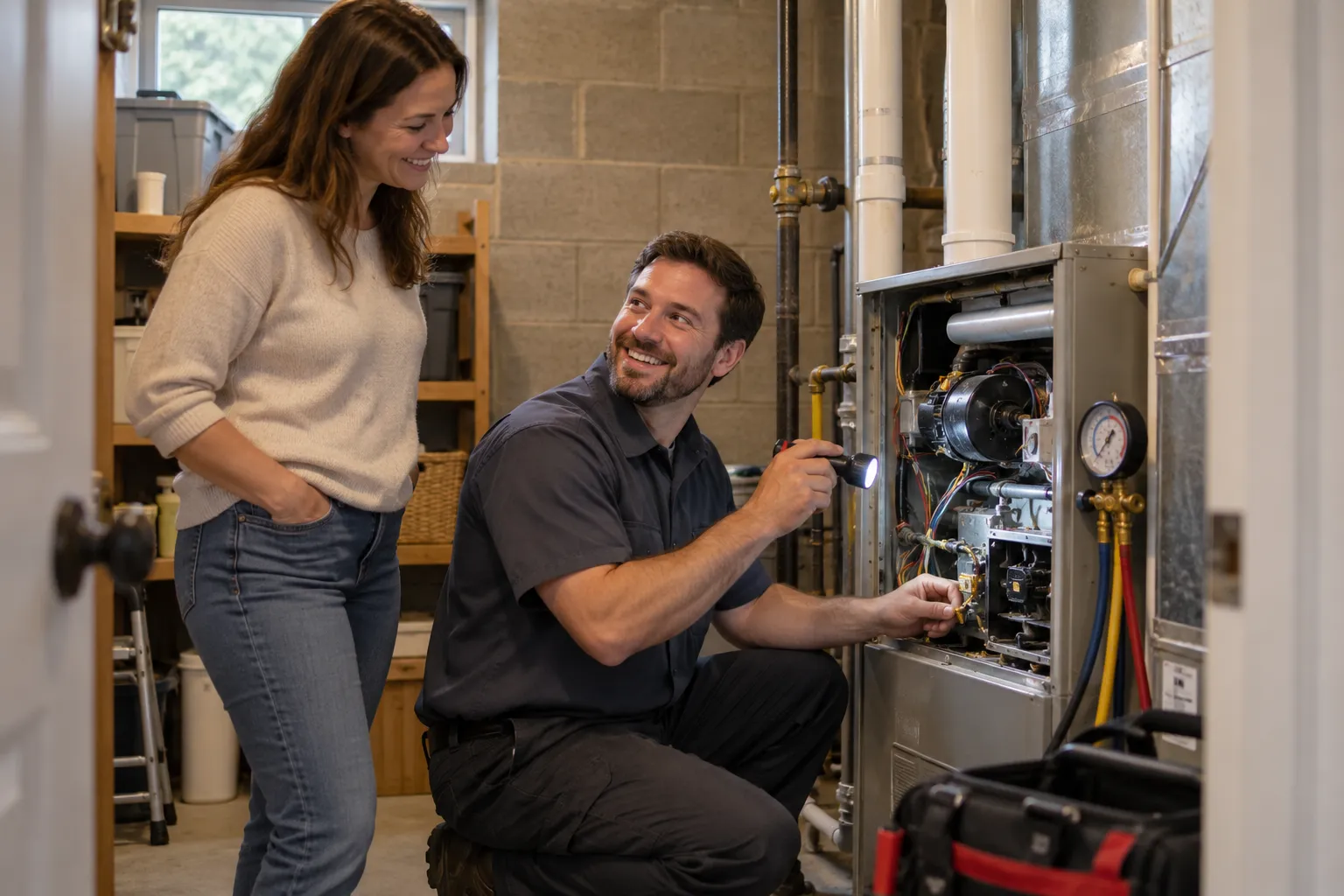
Is your furnace blowing cold air, making odd noises, or refusing to start? You are not alone. In the Orlando area, many furnaces sit unused for months and then fail on the first chilly night. The good news is that many furnace problems have simple, fixable causes.
Enforcementcombined Heating & Air is a referral service. We do not repair furnaces ourselves. We connect homeowners with independent heating and cooling providers in our network. The provider inspects the unit, explains the problem in plain words, and gives you a written quote before work starts. Doing the job right protects your home, keeps your family safe, and supports its value when it is time to sell.
Is your house cold and your furnace silent?
Take a breath. Furnace trouble feels stressful, but most problems have a clear cause. This page goes from the most urgent issue to the least. Providers do the work. Enforcementcombined Heating & Air simply helps you reach one in our network.
Do you smell gas?
Treat it as an emergency. Do not flip switches, use a lighter, or start a car in the garage. Walk outside right away. Then contact your gas company or emergency services from outside. Stay out until someone tells you it is safe.
What if a carbon monoxide alarm is sounding?
Get everyone into fresh air first. Then call emergency services. A furnace provider can inspect the unit only after the home is cleared. Test your alarms often and swap the batteries on a regular schedule.
Can you check anything yourself first?
Yes, a few safe things are worth a minute. Ask first, then act:
- Set the thermostat to heat, a few degrees above room temperature.
- Replace weak thermostat batteries.
- Check the breaker and the switch near the furnace.
- Look at the air filter. A clogged one can shut a furnace down.
- Make sure no furniture blocks the vents.
Do not open the burner area or touch gas parts. Leave that to a provider.
Get Started
Why does a furnace fail on the first cold night?
In warm, humid areas, a furnace may run only a few weeks a year. Dust settles. Parts sit still and can corrode in the damp air. Then the first cold snap arrives and the weak spot shows up. A check before winter can catch this early.
What signs say your furnace needs repair?
Watch for these:
- Little or no warm air
- Banging, squealing, or rattling sounds
- The unit turns on and off again and again
- A yellow or flickering flame instead of a steady blue one
- A smell of burning that does not fade
- Heating bills that creep up
Is a burning smell normal?
Sometimes. A light dusty smell on the first start of the season is common. Dust is burning off. But if the smell lingers, smells like hot plastic, or you see smoke, shut the furnace off and ask a provider to look.
What happens during a repair visit?
A provider usually starts with questions about what you noticed. Then they check the thermostat, filter, igniter, flame sensor, blower, and safety controls. They also look at the venting and gas connections. After that, they explain what they found and what it costs. Ask for the quote in writing before work begins.
Which repairs come up most often?
Providers in our network often handle jobs like these:
- Replacing a worn igniter
- Cleaning a dirty flame sensor
- Fixing a blower motor or capacitor
- Swapping a faulty thermostat
- Replacing a control board or limit switch
- Clearing a blocked drain on high-efficiency models
Does a good repair protect your home's value?
It does. Buyers and inspectors look closely at heating and cooling. A furnace that runs safely, with receipts to show its care, helps protect the home and its future resale. Keep every invoice in one folder.
Should you repair it or replace it?
This is the big question. Think about these points:
- The furnace is more than 15 years old
- The repair costs a big share of a new unit
- Breakdowns keep happening
- A provider finds a cracked heat exchanger
- Bills keep rising
If you have searched furnace replacement near me, ask the provider to explain both paths with prices side by side. Then choose with a clear head.
Get Started
What should you ask the provider?
Good questions make for good jobs:
- Are you licensed to work in my state?
- Will I get a written quote before work starts?
- Is there a diagnostic fee, and does it go toward the repair?
- What warranty comes with parts and labor?
- Can you document the damage if I need to file a claim?
Could insurance help?
Some policies may cover sudden damage, like a power surge. Check your policy to be sure. Providers can often help document damage for a claim. Normal wear and tear is usually not included.
How do storms play into furnace trouble?
Almost daily summer storms and hurricane season can bring power surges and flooding. Furnaces in garages, closets, and low spots are most at risk. After a big storm, ask a provider to check the unit before you turn it on.
How does Enforcementcombined Heating & Air fit in?
Here is the plain truth. Enforcementcombined Heating & Air is a referral service. We do not repair or install anything. We connect you with independent heating and cooling providers. Each provider sets its own prices, hours, and availability. Request a callback to check provider availability, or use the request form.
Ready for the next step?
If your HVAC service needs are clear, the next move is easy. Reach out, share what is happening, and get matched with a local provider.
Get Started
What's Included
Safety Check
A provider checks the flame, venting, and gas connections so your furnace runs safely all season.
Clear Diagnosis
Symptoms are traced to a cause, then explained in plain words before any work begins.
Common Fixes
Igniters, sensors, blowers, thermostats, and control parts are among the usual repairs.
Written Quote
You can ask for the price and the plan on paper, so there are no surprises later.
What Furnace Repair Typically Costs
Prices vary by home, brand, and part. These are typical U.S. ranges, not quotes. Always ask the provider for a written estimate before any work starts, so you can compare choices calmly.
| Repair item | Typical range | Notes |
|---|
| Diagnostic visit | $75 – $200 | Often fee for finding the cause |
| Igniter or pilot part | $150 – $500 | Common on older units |
| Flame sensor cleaning or swap | $100 – $350 | Quick job for many providers |
| Thermostat replacement | $100 – $500 | Smart models cost more |
| Blower motor or capacitor | $400 – $1,500 | Depends on motor type |
| Control board | $300 – $1,000 | Brand and model matter |
Get Started
How It Works
Share What Happened
Tell us about the noises, smells, or cold air you noticed, and where the furnace sits.
Get Matched to Providers
We connect you with an independent provider in our network who serves your area.
Review the Estimate
The provider explains the problem and gives a written quote before starting.
Approve and Get Heat Back
You say yes when ready, and the provider handles the repair.
Why Call Enforcementcombined Heating & Air
Providers Do the Work
Enforcementcombined Heating & Air only connects you. Independent local providers handle the inspection, repair, and any written quote.
Ask First
We encourage you to ask questions before you agree to any repair.
Protect the Home
Careful repairs keep the house safe, comfortable, and ready for resale.
Honest Referrals
We explain how referrals work, so you know who does what.
Other Services