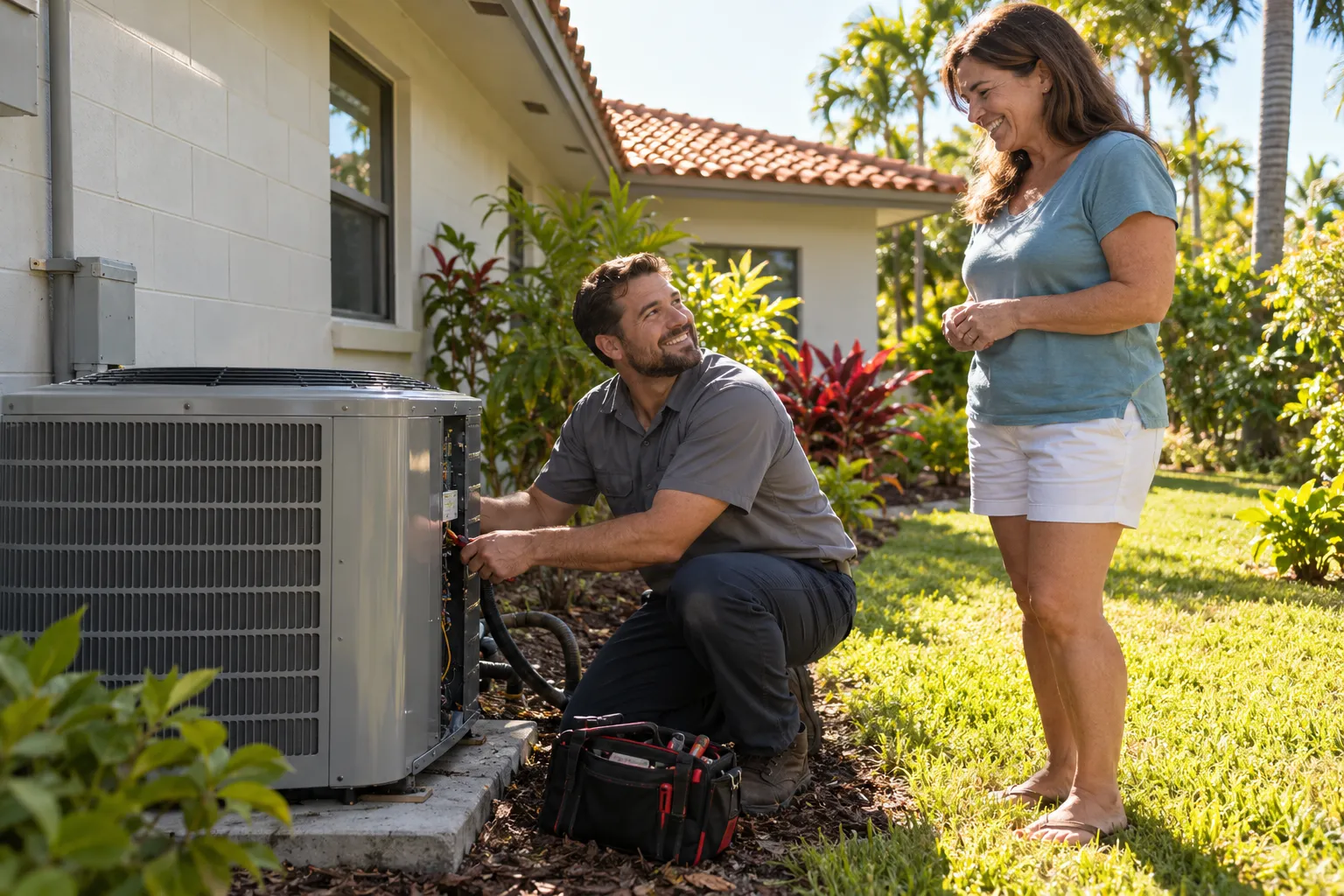
When the air from your vents turns warm, the whole house feels it. Humid air makes a home sticky fast, and that can hurt floors, furniture and sleep. This page explains what to check, what is safe to try, and when it is time to hand the problem to a pro. It also covers common repairs, rough costs and smart questions to ask.
Enforcementcombined Heating & Air is a referral service. Providers do the work, and Enforcementcombined Heating & Air only connects you with independent heating and cooling professionals near Orlando. You can call or send a request, share what is going on, and a local provider can talk through next steps with you. There is no obligation to hire anyone. Fixing a cooling problem the right way protects the home, its comfort and its value for years to come.
Is your AC blowing warm air right now?
Take a breath. Many cooling problems have simple causes. In a humid climate a house heats up fast, so it helps to act in a smart order. Ask first, then act.
What can you safely check first?
A few quick checks take five minutes. None of them need tools.
- Set the thermostat to cool, a few degrees below room temperature.
- Look at the breaker panel for a tripped switch.
- Check the air filter. A clogged one chokes airflow.
- Walk outside and make sure the outdoor unit is not buried in leaves or debris.
If these checks change nothing, stop there. Do not open panels or touch wiring.
When is it an emergency?
Some signs mean you should shut the system off at the thermostat and the breaker:
- A burning smell, smoke or sparks
- Loud grinding, banging or buzzing
- Water pooling near electrical parts
- A very hot home with babies, older adults or someone with health needs inside
If you see smoke or fire, contact emergency services first. For emergency AC repair, Request a callback to check provider availability. Many providers can respond quickly, though timing depends on the provider and the day.
Get Started
Should you keep running a struggling AC?
Usually, no. A system that hums but does not cool can overheat. Running it harder can turn a small fix into a big one. Turn it off, open blinds on the sunny side, run fans and wait for a pro.
What are the common signs your AC needs repair?
Not every problem is loud. Watch for these:
- Air that feels weak or only slightly cool
- A system that turns on and off in short bursts
- Rooms that stay muggy even when the AC runs
- Higher power bills with no change in habits
- Odd smells from the vents
Why is there ice or water at the indoor unit?
Ice on the coil often points to low airflow or a refrigerant issue. Water around the indoor unit often means a clogged drain line. With high humidity most of the year, an AC pulls a lot of moisture from the air, and that water needs a clear path out. A blocked line can stain ceilings and soak flooring. Turn the system off and let a provider look.
What if a storm knocked the AC out?
Summer storms roll in often in warm, wet regions. Power surges can damage the parts that start your system. After a storm, check the breaker first. If the unit still will not start, leave it off and get it checked.
During hurricane season, outdoor units can also take a hit from wind or flooding. Never run an AC that has stood in water. Some policies may cover sudden damage, so check your policy. Providers can often help document damage for a claim.
What happens during an AC repair visit?
A typical visit goes in a clear order. The provider asks what you noticed. Then they inspect the thermostat, the indoor unit, the outdoor unit and the airflow. They test electrical parts and check refrigerant pressure.
Next they explain what they found. A good provider gives you a written quote before starting work. You decide whether to go ahead. Providers do the work, and you stay in control.
Get Started
What are the most common AC repairs?
Many cooling failures come from a short list of parts:
- Capacitor: helps motors start. Small part, common failure.
- Contactor: the switch that powers the outdoor unit.
- Fan motor: moves air across the coil or through the house.
- Drain line: clogs from algae and dust.
- Refrigerant leak: low levels mean weak cooling. Leaks need to be found and fixed, not just topped off.
- Thermostat: sometimes the control is the whole problem.
Is it worth repairing, or is it time to replace?
Great question. Age matters, and so does repair history. A newer system with one small failed part is usually worth fixing. An older system with costly repairs piling up may be better to replace. Ask the provider to compare both paths in writing.
Replacement has its own page on this site. If you are also searching furnace replacement near me, that topic has its own page too. Here we stay on repair.
How does a proper repair protect your home's value?
A home that stays cool and dry resists mold, warped floors and damp drywall. Buyers and inspectors notice a tired system. Clear repair records show the home was cared for. Protect the home now, and it pays off later.
Who does the work, and who is Enforcementcombined Heating & Air?
Here is the plain truth. Enforcementcombined Heating & Air is a referral service. We do not repair anything and we have no technicians of our own. We connect homeowners with independent local providers in our network. When you call or send a request, it is routed to a provider who handles your type of job. Each provider sets their own prices, schedule and terms.
What should you ask the provider?
Good questions make a good job. Try these:
- Is the quote in writing, and does it list parts and labor?
- Is the diagnostic fee applied to the repair if I go ahead?
- Are you licensed and insured in my state?
- Do the parts and the work come with a warranty?
- Will you explain the problem so I can see it?
Get Started
How can you prevent the next breakdown?
Small habits help heating and cooling systems last:
- Change the filter on schedule.
- Keep plants and debris clear of the outdoor unit.
- Pour a little water down the drain line access when a provider shows you how.
- Book a yearly check before the hot season.
If you want a straight answer on your cooling problem, ask first, then act.
Get Started
What's Included
Fault Diagnosis
A provider tests the thermostat, airflow, electrical parts and refrigerant pressure to find why cooling stopped.
Written Quote
You get the price in writing before work starts.
Part Replacement
Worn capacitors, contactors, motors and similar parts can be swapped to restore steady cooling.
Drain and Airflow Care
Providers can clear clogged drain lines and check filters and vents to prevent water and humidity damage.
Typical AC Repair Costs
Prices vary by home, system age, part and provider. These are typical U.S. ranges only, not quotes. Always ask for a written quote before you agree to any repair work.
| Repair item | Typical range | Notes |
|---|
| Diagnostic visit | $75 – $200 | Some providers apply it to the repair |
| Capacitor replacement | $120 – $400 | Common, quick fix |
| Contactor replacement | $150 – $400 | Powers the outdoor unit |
| Drain line clearing | $100 – $300 | Helps stop water leaks |
| Fan motor replacement | $400 – $900 | Varies by motor type |
| Refrigerant leak repair | $200 – $1,500 | Depends on leak location |
Get Started
How It Works
Share Your Problem
Request a callback or send the request form and tell us what your AC is doing right now.
Get Connected
Enforcementcombined Heating & Air routes your request to a local provider in our network.
Review the Quote
The provider explains the issue and gives you a written quote.
Choose Your Next Step
Approve the repair, ask questions or decline. The choice is yours.
Why Call Enforcementcombined Heating & Air
Plain Answers
We explain things in simple words, so you know what to expect before anyone comes to your door.
Honest Referral
Enforcementcombined Heating & Air connects you with providers. Providers do the work and set their own prices.
Local Providers
Independent providers in our network know local homes, humidity and storm season.
No Obligation
You can ask questions and compare, then decide for yourself with no pressure.
Other Services